
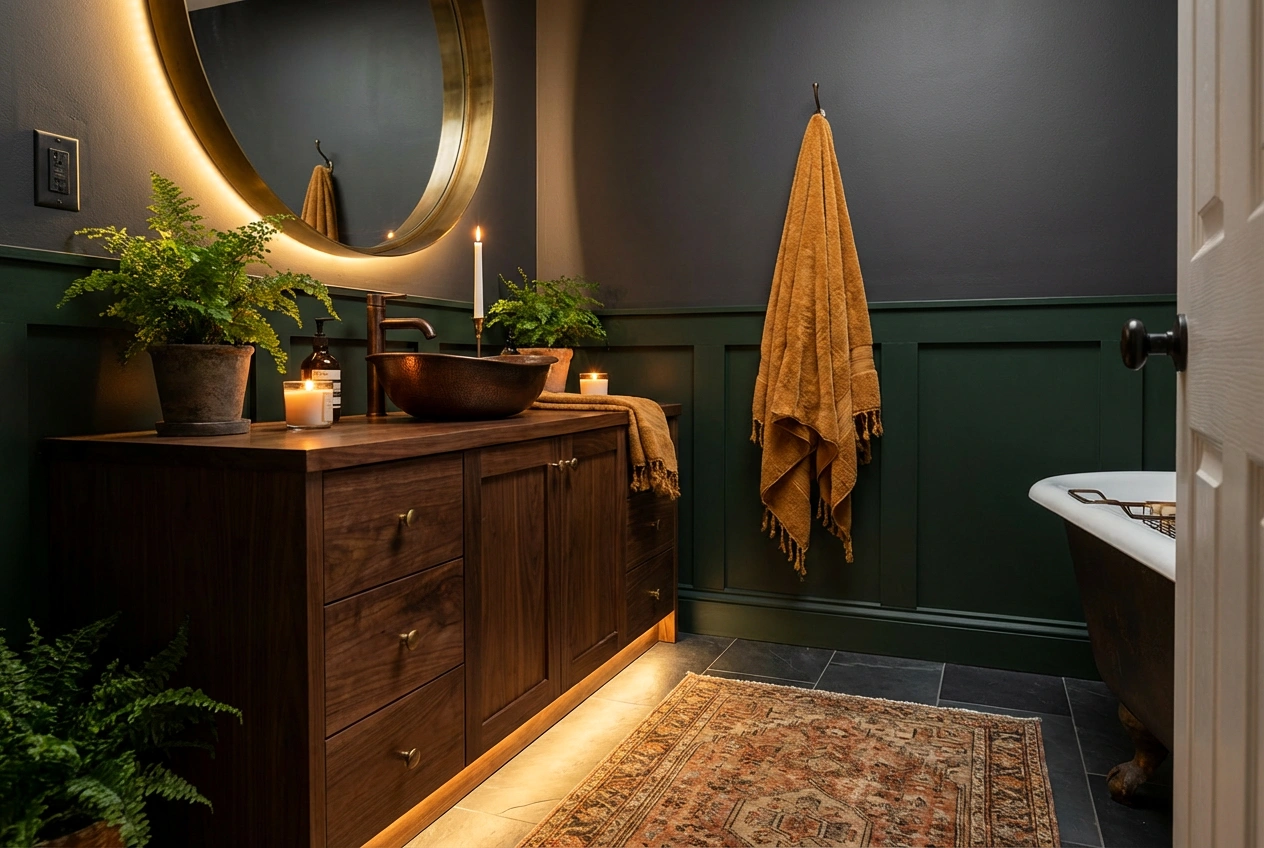
15 Cozy Small Bathroom Style Design Ideas for a Warm and Moody Ambience
Transforming a compact bathroom into a sanctuary of warmth and moody elegance is a rewarding design challenge. This approach to bathroom style design moves beyond mere functionality, crafting an intimate, enveloping atmosphere that feels both luxurious and deeply personal. By embracing rich colors, textured materials, and thoughtful lighting, you can turn even the smallest washroom into a cozy retreat. This guide will explore 15 inspiring ideas to help you achieve a warm and moody ambience, proving that size is no barrier to profound style and comfort. Ultimately, this aesthetic is about creating a space that soothes the senses and provides a daily moment of respite.
Introduction to 15 Cozy Small Bathroom Style Design Ideas for a Warm and Moody Ambience
Imagine stepping into a bathroom that feels less like a utilitarian space and more like a secluded, sophisticated nook—a place where you can unwind after a long day. The warm and moody aesthetic is precisely that: an interior design philosophy that champions depth, drama, and coziness. This style is characterized by its use of darker, saturated color palettes—think deep charcoal, forest green, navy blue, or even black—paired with rich textures like matte black fixtures, aged brass, natural wood, and plush textiles. The lighting is soft and layered, casting gentle pools of light that highlight textures and create shadow, adding to the intimate feel.
Contrary to popular belief, this bathroom design approach is exceptionally well-suited to small spaces. When executed thoughtfully, dark colors can recede, making walls feel less defined and the space more expansive and cocoon-like. The key lies in balancing the depth with tactile elements and strategic illumination to prevent the room from feeling cave-like. This decor style is transformative because it engages the emotions; it’s a deliberate departure from sterile, all-white bathrooms, offering a sense of security, luxury, and quiet drama. For homeowners, renters, and DIY enthusiasts alike, achieving this look is an exercise in crafting atmosphere, proving that every square inch of your home can contribute to your overall sense of well-being.
Why Choose a Warm and Moody Bathroom Style Design for Your Space
Opting for a warm and moody bathroom aesthetic is a powerful design decision that offers a multitude of benefits, particularly for compact rooms. Firstly, this style masterfully creates an unparalleled sense of comfort and intimacy. The deep hues and soft lighting work in concert to craft a enveloping, cocoon-like environment that feels protective and serene—a perfect escape for a long bath or a quiet moment. Furthermore, this design philosophy excels in visual harmony. By limiting the color palette to a few rich, complementary shades and repeating textures and materials, you create a cohesive and deeply satisfying look that feels intentional and polished.
From a practical perspective, a moody bathroom decor scheme can be incredibly forgiving and functional. Darker walls and floors are often more adept at hiding water spots, dust, and minor wear-and-tear compared to their light-colored counterparts. Additionally, this style encourages the maximization of space through perception. While bright colors can highlight every corner and edge, deep tones blur boundaries, making the room’s limits less apparent. This visual trick can make a small bathroom feel more expansive and less confined. Ultimately, this style stands out because it prioritizes atmosphere and emotional impact over mere trendiness. It’s a timeless, bold choice that injects personality and luxury into the most private room of your home, making everyday routines feel like a special ritual.
Key Elements & Design Components
Essential Decor Items for a Warm and Moody Bathroom
To successfully execute this bathroom style design, certain key components are non-negotiable. Each element contributes to the layered, sensory experience that defines the look.
- Color Palette: This is the foundation. Opt for saturated, deep colors like charcoal gray, midnight blue, olive green, burgundy, or even flat black. These should be used on walls, cabinetry, or even the ceiling for a fully immersive effect. Complement these with warm neutrals like cream, taupe, or soft beige for trim, tiles, or textiles to provide balance.
- Lighting: Layered lighting is critical. Avoid harsh overhead lights. Instead, combine:
- Ambient Lighting: A dimmable central fixture or recessed lights on a dimmer.
- Task Lighting: Sconces or vertical lights flanking the mirror with warm-toned bulbs (2700K-3000K).
- Accent Lighting: LED strip lights under a vanity, inside a niche, or behind a mirror for a soft glow.
- Textures & Materials: This is where warmth is injected. Incorporate:
- Natural Wood: In vanities, shelving, or accessories to add organic warmth.
- Matte & Brushed Finishes: Matte black, aged brass, or oil-rubbed bronze for faucets, hardware, and lighting.
- Textured Surfaces: Zellige or subway tiles with a crackle glaze, fluted glass, or a pebbled stone floor.
- Plush Textiles: A thick, absorbent bath mat (in a dark or neutral tone), a luxurious waffle-weave shower curtain, and high-quality towels.
- Metallic Accents: Warm metallics like brass, copper, and gold are essential for adding reflective points that catch the low light, preventing the space from feeling flat.
- Botanical Elements: Real or high-quality faux plants (like a ZZ plant or snake plant that tolerates humidity) add life and a touch of organic shape against the structured, dark backdrop.
Style Variations & Budget-Friendly Alternatives
Achieving this bathroom interior design look is possible at any budget. For renters or those not ready to commit to dark paint, consider using temporary solutions like peel-and-stick wallpaper in a dark, textured pattern on one accent wall. If a new vanity is out of reach, you can paint your existing one with a high-quality, moisture-resistant paint in a deep hue like navy or forest green. Similarly, you can update hardware and lighting fixtures with brushed brass or matte black finishes without a full renovation.
For different spatial needs, consider these adaptations: In a very small powder room, you might go all-in with dark paint on every surface, including the ceiling, for a dramatic jewel-box effect. In a slightly larger bathroom with a window, you could use moody colors on the lower half of the walls or just in the shower niche, pairing it with lighter tiles elsewhere to maintain airiness. The core principle is to adapt the intensity of the moody elements to your space’s proportions and natural light, ensuring the result feels cozy, not cramped.
How to Achieve the Look: Step-by-Step Styling Guide
Follow this actionable guide to transform your small bathroom into a warm and moody retreat.
Step 1: Commit to Your Color Story
Begin by selecting your dominant moody color. Don’t be afraid to go dark. Paint a large sample on the wall and observe it at different times of day. Then, choose 1-2 complementary colors—a warm neutral (like cream) and a metallic accent (like brass). This limited palette will ensure cohesion. For instance, a deep teal wall paired with cream linen and brass fixtures creates an instantly sophisticated bathroom design.
Step 2: Layer Your Lighting Plan
Before any permanent changes, plan your lighting. Install a dimmer switch on your main light immediately. Next, identify locations for task lighting (beside the mirror) and accent lighting (in a shower niche, under the vanity). Choose fixtures with warm metal finishes and bulbs that emit a soft, warm glow (labeled “soft white” or “warm white”). This layered approach is the single most important factor in achieving ambience.
Step 3: Introduce Texture Through Surfaces
This step builds depth. If you’re renovating, consider textured tiles for the floor or shower. If not, introduce texture through accessories: a woven seagrass laundry basket, a fluted glass vase, or wood-framed mirrors. Even a shower curtain with a interesting weave or pattern adds a vital tactile layer to your bathroom styling.
Step 4: Select a Statement Vanity or Storage
Your vanity anchors the room. Opt for one in a natural wood tone or paint a simple one in your accent color. Ensure hardware is consistent—choose matte black or aged brass pulls and taps. For open shelving, style sparingly with folded towels, a small plant, and a decorative object in your chosen metallic.
Step 5: Incorporate Warm Metallics Strategically
Use your chosen metal as a repeating thread. A brass faucet, a black metal towel ring, and a brass-framed mirror should feel connected. These reflective surfaces will bounce the soft light around the room, adding sparkle and preventing the dark palette from feeling heavy.
Step 6: Add Life with Botanicals and Art
A single, lush green plant in a simple pot breaks up the monotony of dark surfaces. For art, choose pieces with warm tones, abstract forms, or vintage botanical prints in simple black or brass frames. This personalizes the space and adds a final layer of curated interest to your bathroom decor.
Step 7: Finish with Luxurious Textiles
The final touch is softness. Invest in the thickest, plushest bath mat you can find in a dark charcoal or neutral tone. Hang luxurious towels (Turkish cotton or waffle weave) on a warm metal rail. Choose a shower curtain that complements your texture story—a heavy linen or a textured PVC alternative. These elements invite touch and complete the cozy sensation.
Elevating the Look: Advanced Styling Tips
To truly perfect your moody bathroom style design, consider these nuanced touches. First, play with scale and reflection. A large-format mirror, especially one with a distinctive frame, can amplify light and make the space feel larger. Conversely, a small, ornate mirror can become a captivating focal point. Secondly, don’t neglect the fifth wall—the ceiling. Painting it a dark color (like a deep blue-gray) can dramatically heighten the cocoon effect, making the room feel intentionally intimate.
Furthermore, curate a sensory experience beyond the visual. Introduce a subtle, grounding scent via a cedarwood diffuser or a high-quality soy candle (safely placed). Finally, embrace imperfection and patina. A piece of vintage furniture repurposed as a vanity, or a mirror with slight tarnishing on its brass frame, adds soul and history, preventing the space from feeling too new or sterile. These advanced details transform a well-styled room into a deeply personal sanctuary.
Maintenance & Care: Keeping Your Space Fresh
Maintaining the sophisticated appeal of your moody bathroom interior is straightforward with the right habits. For dark-painted walls, use a microfiber cloth for regular dusting to prevent buildup. Clean splashes and spots promptly with a gentle, non-abrasive cleaner to maintain the finish. Matte surfaces, while stylish, can show fingerprints; a damp cloth usually suffices for cleaning.
To keep the space feeling fresh, rotate textiles seasonally. You might have heavier linen towels for winter and lighter cotton ones for summer, always within your color palette. Regularly declutter surfaces to uphold the intentional, curated feel. Lastly, ensure your ventilation is excellent to protect your investment from excess moisture; run the exhaust fan during and after showers to preserve paint, wood, and metal finishes. This proactive care ensures your cozy retreat remains a beautiful and enduring part of your home.
FAQs: Frequently Asked Questions About Warm and Moody Small Bathrooms
Q: Won’t dark colors make my small bathroom feel even smaller and darker?
A: This is a common misconception. When done correctly, dark colors can blur the edges of a room, making the boundaries less defined and creating a feeling of expansive coziness. The crucial counterbalance is layered, warm lighting and reflective surfaces (mirrors, metallics) which prevent the space from feeling cave-like and instead make it feel intimate and luxurious.
Q: I’m a renter. How can I achieve this bathroom style design without painting?
A: Renters have fantastic options! Focus on removable elements: a dark, textured shower curtain, plush rugs and towels in moody hues, and brass or black metal accessories (towel bars, shelf units). You can also use peel-and-stick tiles or wallpaper on a focal wall, and even place a freestanding cabinet or shelf unit painted in a dark color. Lighting is also key—swap out light bulbs for warm tones and add plug-in sconces.
Q: What is the best way to choose a color for this type of bathroom decor?
A: Start by considering the existing elements you can’t change, like floor tiles or countertops. Find a deep shade that complements those. Always test paint samples directly on the wall, observing them at different times of day under both natural and artificial light. Colors like charcoal, deep green, and navy are classic, versatile starting points that work with many materials.
Q: How can I add warmth if I have mostly cool-toned tiles (like white or gray)?
A: You can absolutely warm up cool tiles. Introduce warmth through your other elements: use wood tones in your vanity and shelves, choose brass or gold metallic finishes, and layer in textiles in cream, caramel, or taupe. Even with cool gray tiles, a deep burgundy or olive green on the walls, paired with brass and wood, will create a beautifully warm and moody contrast.
Q: Is this aesthetic practical for a family bathroom?
A: Yes, but with smart choices. Opt for a satin or eggshell paint finish on walls, which is more wipeable than matte. Choose dark-colored, patterned, or textured bath mats that hide stains. Ensure storage is ample and closed (like a dark-painted cabinet) to keep clutter out of sight. Durable materials like porcelain floor tiles and quartz countertops will stand up to family use while maintaining the desired look.